Micro-Spray Pipe or Woven Micro-Spray Hose?
PE micro-spray pipe and woven micro-spray hose suit different installations: fixed versus movable, discrete heads versus a spray band, coverage versus handling.
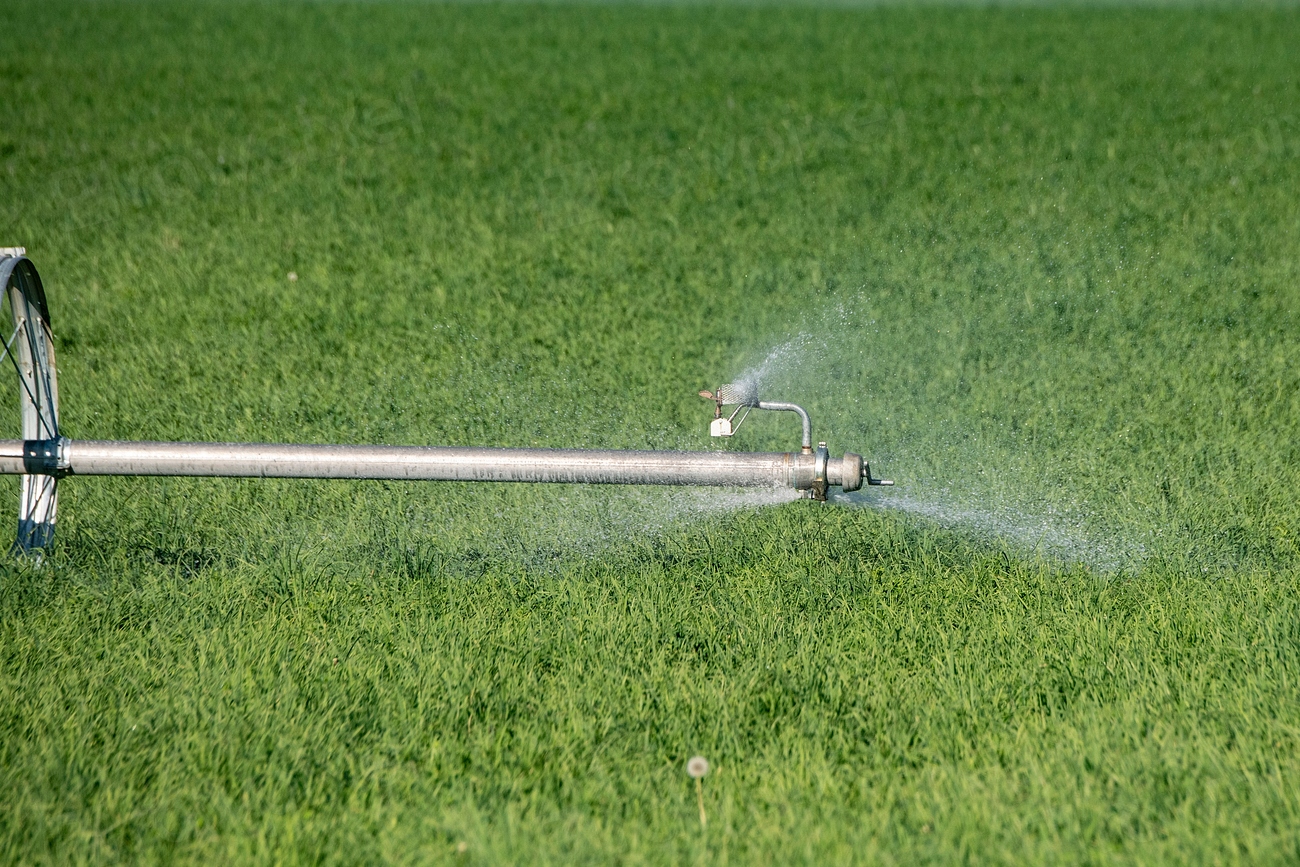
Micro-spray pipe and woven micro-spray hose both deliver a fine spray, and the difference is how the line is installed and how long it stays there. One is a permanent PE line with micro-sprinklers at defined spacing; the other is a woven hose that sprays along its length and is rolled up at the end of the season. Neither is better. They answer different questions about coverage, handling and life.
01 – Why each channel needs it, and where it is used
| Channel | Role in this decision | Why they need it |
|---|---|---|
| Distribution and wholesale | Stock both forms for different customer types | Nurseries and greenhouse growers buy the fixed line; landscapers and seasonal growers buy the hose. A distributor with one form loses half the enquiries |
| Contractors and integrators | Choose per bed and per season | A fixed line on a bed that is replanted every year becomes an obstacle; a hose on a permanent nursery bench becomes an annual labour cost |
| Direct B2B users – nurseries, greenhouses, market gardens, estates | Buy for their own benches and beds | Both need fine spray without wetting foliage unevenly, but one has permanent benches and the other rotates crops |
| Specifiers and influencers – landscape designers, horticultural consultants | Specify the irrigation form for a planting scheme | The form decides the layout and the maintenance routine; specifying it late produces retrofits that look temporary |
The fixed PE line suits nursery benches, greenhouse beds, permanent plantings and raised beds where the layout does not change. The woven hose suits dense beds, seasonal crops, temporary plantings and sites where the line has to be moved or stored. Where a site has both types of bed, both forms appear – and that is common in nurseries that propagate on benches and grow on in open beds.
The commercial difference is the second season. A fixed line is bought once and inspected; a hose is bought, stored, reused and eventually replaced. Both are legitimate purchases, and the supplier who can quote both keeps the account through the change of crop.
02 – How to make a preliminary selection
Start with the bed and its life. A bench or bed that will be in place for years favours the fixed line, because the layout is designed once. A bed that is replanted, rotated or moved favours the hose, because the installation has to follow the crop.
Then look at the coverage required. A fixed line covers from discrete heads, so the layout is designed head to head and the overlap is deliberate. A hose covers in a band along its length, so placement and height decide the wetted strip. Narrow beds suit the band; wide beds with mixed planting suit the designed pattern.
Then confirm the hydraulic side at the line, not at the pump. The last head on a long fixed run is where the pattern degrades first; on a hose, the far end of a long run sprays more weakly than the inlet. Measuring at the far end during commissioning is the fastest way to find out whether the run is too long for the pressure available.
Finally, decide the filtration before ordering. Micro-spray heads and hose walls are narrow passages; a fine element in front of them is not optional. The grade is confirmed per product, and it belongs in the same order as the line rather than in a later conversation.
03 – Comparing the realistic options
The table compares how the two forms behave in service, which is what a buyer can check on site within one season.
| Question | PE micro-spray pipe | Woven micro-spray hose |
|---|---|---|
| Installation life | Permanent | Seasonal or movable |
| Coverage | From discrete heads | Continuous band along the hose |
| Layout work | Spacing and throw design | Placement and height |
| Handling | Fixed in place | Rolled, moved, stored |
| Main constraint | Pressure at the last head | Pressure along the run |
| Best fit | Nursery benches, greenhouses, permanent beds | Dense beds, seasonal crops |
A related fact from the emitter side: Rain Bird’s XFA 13 mm dripline specifies 120 mesh filtration and Netafim’s Techflow specification states 120 mesh or finer, which is the class of protection that micro-spray components are usually compared against. The spray head and the hose wall are both narrow, so the filter is decided by the finest passage in the installation.
03b – What the first season shows
Record three things after the first cycle: the wetted area on the surface, the pressure at the far end of the line, and the time the cycle took. Those three numbers tell you whether the layout matches the bed, whether the run length fits the pressure, and whether the schedule is realistic. On a hose, add whether the band reached both edges of the bed; on a fixed line, add whether any head was dry when others were running.
The seasonal comparison is the cost, not the price. A fixed line costs more at installation and less each season; a hose costs less up front and more in handling. Over three seasons the totals converge, and the deciding factor becomes how much labour the site can give the bed.
04 – What goes wrong, and what still needs confirming
Fixed lines fail at the joints and at the last head, where pressure is lowest and debris collects. Hoses fail at fold lines and couplings, because the material is handled every season. Neither is a reason to avoid the form; both are reasons to keep the spare parts that match the installation.
Items to confirm in writing: the recommended maximum run length at your pressure; the spray width or throw for the head you intend to use; the hose’s working pressure range; the filtration grade; the packing, MOQ, price and lead time; and the spare parts available for the head or the coupling. A quotation that lists a length of pipe or hose without its working pressure is not a specification yet.
05 – What we can supply and what to send
Delta AgriFlow supplies both forms: 16 mm PE micro-spray pipe for permanent installation, 2-inch woven micro-spray hose for dense beds and seasonal use, with Y-pattern filters and timers to complete the arrangement.
Send six items: bed or bench dimensions and shape; whether the installation is permanent or seasonal; water source, flow and pressure at the line; crop or plant type and canopy; filtration available; and the quantity for a first order. With those, the form becomes a matching exercise rather than a preference.
Storage matters more than buyers expect. A hose stored wet develops mould and blocked pores, and a fixed line left without an end-of-season flush carries debris into the next season. Both routines take ten minutes; neither happens unless the installation was designed to allow it, which is why the end closure and the flushing point belong in the first quotation rather than in a later service call.
A last decision that belongs in the first order: the spare set. A fixed line needs spare heads and a repair coupling; a hose needs a spare coupling and a repair sleeve. Both are inexpensive at the time of purchase and inconvenient to source mid-season, and both decide whether a small failure costs an hour or a week.
Where the site has both benches and open beds, the two forms can share a head: one filter, one timer, two lines. That arrangement is cheaper than two independent systems and it keeps the filtration class consistent across both, which is the part that most often drifts when installations are bought separately.
06 – Questions, sources and next steps
Can a hose replace a fixed line permanently? Where the bed is narrow and a band pattern is acceptable, yes. Where coverage has to be designed head to head, the fixed line gives more control over where water lands.
Which form needs finer filtration? Whichever has the narrower passage. Spray heads and hose walls are both narrow, so the grade is confirmed per product rather than assumed.
Does a hose need a pressure regulator? Where supply pressure varies or exceeds the hose’s range, yes. The range is confirmed per product, and the regulator protects both the pattern and the material.
Information boundary
This article describes how the decision is structured. It is not a performance specification and does not state capacity, flow, pressure or service-life values for a specific product. Those values are confirmed per project after a written quotation; manufacturer figures cited are the published values for those products, not project commitments.
Reviewed: 2026-10-26. Next review after supplier specifications are confirmed in writing.
Sources and further reading
- Rain Bird XFA 13 mm dripline datasheet – 120 mesh filtration requirement
- Netafim Techflow bid performance specification – 120 mesh or finer filtration, disc grades 40-200 mesh
- ISO 9912-1:2004 – Filters for micro-irrigation: classification
- ISO 18471:2015 – Verification of filtration grade
Choosing a micro-spray form? Send bed dimensions, installation life and line pressure through our quotation request.