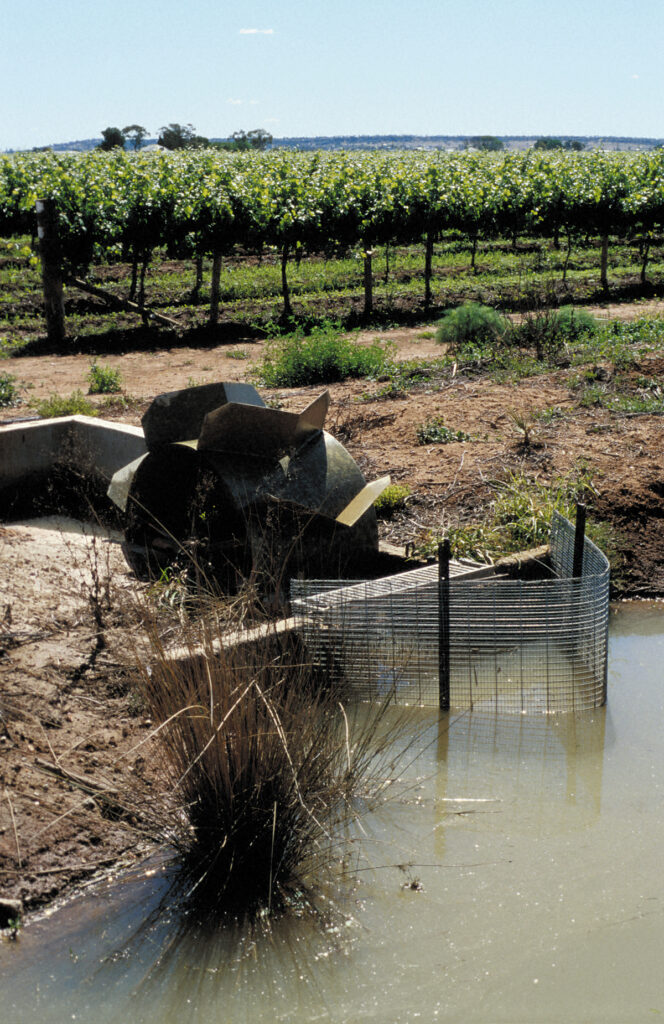
Remote Water Monitoring for Unattended Irrigation Sites
Monitoring replaces a site visit only if the data reaches someone who can act. The chain from sensor to threshold to recipient to response.
Remote monitoring is worth buying when the alternative is a site visit, and it replaces the visit only if the data reaches someone who can act. The sensor is the easy part. The chain that matters is sensor, transmission, threshold, recipient and action, and a break anywhere in that chain leaves a site that is instrumented but not monitored.

01 – Why each channel needs it, and where it is used
| Channel | Role in this decision | Why they need it |
|---|---|---|
| Distribution and wholesale | Offer monitoring as a service, not a box | The box is the cheap part; the recipient list and the response are what the customer is actually buying |
| Contractors and integrators | Set up the alarm chain | A site that alarms to nobody is a site that fails quietly, and the contractor hears about it weeks later |
| Direct B2B users – farms, estates, municipal green, remote nurseries | Watch sites they cannot visit daily | The value is the avoided visit and the avoided loss, both of which are measurable |
| Specifiers and influencers – water engineers, maintenance firms | Define the monitoring scope | Data without a threshold and a recipient is storage, not monitoring |
It appears on unattended irrigation sites: remote farms, seasonal estates, municipal green visited weekly, reservoirs and pump stations without resident staff. In each case the questions are the same: is water flowing, is the level adequate, is the pressure where it should be.
02 – How to make a preliminary selection
Start with the decision the data has to support. A leak alarm, a low-level stop and a delivery record need different sensors, different thresholds and different recipients. Writing the decision first prevents buying a station that measures everything and changes nothing.
Then check the transmission. Mobile coverage, power availability and the enclosure decide whether a unit can live on site unattended. A monitoring point that needs a visit to change a battery has removed part of the saving it was bought for.
Then set the threshold and the recipient. A threshold that is too tight produces alarms nobody reads; one that is too loose produces silence. The recipient list matters as much as the setting, because an alarm that reaches an inbox nobody checks is a log, not a warning.
Finally, plan the data record. Export format and retention decide whether the readings can support a budget, a warranty claim or a compliance report, and ISO 4064 is the reference class where the numbers are used officially.
03 – Comparing the realistic options
The table frames the levels of remote monitoring against what each replaces.
| Level | Signal | Replaces |
|---|---|---|
| Local indication | Gauges at the site | Nothing – requires a visit |
| Alarm only | Threshold exceeded | The emergency visit |
| Periodic readings | Daily or weekly totals | The routine visit |
| Full telemetry | Continuous data and history | Both visits, and supports planning |
Most sites need the second or third level, not the fourth. Buying telemetry for a site with no staff to act on it is the most common overspend in this category.
04 – What goes wrong, and what still needs confirming
The recurring failures are alarms to nowhere, batteries that fail in the first winter, sensors in positions where they cannot sense, and data that is collected but never reviewed. All four are design issues rather than device faults.
Items to confirm in writing: what is measured and its accuracy; the transmission method and coverage assumption; the power source and its life; the threshold and who receives it; the data format and retention; and the commercial terms – SIM or subscription costs, spares, price and lead time.
05 – What we can supply and what to send
Delta AgriFlow supplies the monitoring layer: rain and weather stations, rain, water-level and flow monitors, flow meters and the controllers that act on the signal, with pump panels where the pump must be protected.
Send six items: the decision the data must support; the site’s power and coverage; the number of monitoring points; who receives the alarm; the data record required; and the quantity for a first installation.
One design rule prevents most failures: put the monitoring point where the decision is, not where the cable reaches. A flow meter on the main answers a different question from one on a zone, and the answer is only useful if it maps to an action.
A second is to test the alarm chain before handover. Trigger the threshold deliberately and confirm the message reaches the recipient; an alarm that has never rung is an assumption rather than a system.
A third is to budget the recurring cost. SIM data, subscription and battery replacement are small lines individually and significant over five years; a monitoring proposal that omits them is not comparable with one that includes them.
A fourth is to agree what happens when the alarm fires. A named person, a response time and a fallback make the difference between a warning and a log entry.
Finally, keep the readings in a form the site owns. Local export matters more than a polished dashboard, because the record is what gets used in the next budget cycle and in any dispute.
What to record at handover
A handover that consists of a working system and a verbal explanation is not a handover. Three things have to be written down: what was installed and where, what the settings are, and what the routine is. Record what each monitoring point measures, its threshold, its recipient and its power source.
The commissioning check matters as much as the record. Trigger each alarm deliberately and confirm the message arrives; an alarm that has never rung is an assumption. A reading taken once at commissioning is worth more than a datasheet, because it describes the installation rather than the product.
Finally, hand over the commercial part as clearly as the technical part. Hand over the data export process and the recurring costs, so the next budget cycle accounts for them. Without it, the next order restarts from zero, and the advantage of a standard package disappears.
What to prepare before specifying monitoring
- The decision the data must support
- Number and position of monitoring points
- Power and transmission available
- Alarm recipients and response time
- Data format and retention requirement
- Recurring costs accepted
Where several sites share one monitoring account, the comparison between them is often worth more than the alarms, because it shows which site is drifting before any threshold is crossed.
A last practical point: document the sensor positions. The next person to service the site will not have been present at commissioning, and a photograph with the position and date is the cheapest map available.
Finally, agree how the monitoring changes decisions in the first month. If nothing changes, the system is a cost; if something changes, that change is the business case for the next site.
06 – Questions, sources and next steps
Is remote monitoring always worth it? No. It is worth it when the avoided visits or avoided losses exceed the hardware, the subscription and the attention it needs.
Can one unit cover a whole site? Sometimes, if the decision is site-level. Zone-level questions need zone-level points, and that multiplies cost.
What if the mobile signal is poor? Then the transmission changes – a different network, a local logger with periodic collection, or a wired link. The sensor choice follows the transmission.
Monitoring proposals should separate the hardware from the service, because the two have different lifetimes. Sensors last years; a subscription is an annual decision, and mixing them in one price hides the cost that recurs.
Where several sites are watched by one person, a single weekly summary is more effective than continuous data. The summary gets read; the stream gets muted.
Where the site already has a manual log, the monitoring system should replace that log rather than add to it. A system that doubles the paperwork is abandoned in the first month, however good the data.
Before you order
- Decision the data supports
- Monitoring points and positions
- Power and transmission checked
- Alarm recipient named
- Data export format agreed
- Recurring costs accepted
Information boundary
This article describes how the decision is structured. It is not a performance specification and does not state capacity, flow, pressure or service-life values for a specific product. Those values are confirmed per project after a written quotation; manufacturer figures cited are the published values for those products, not project commitments.
Reviewed: 2026-10-26. Next review after supplier specifications are confirmed in writing.
Sources and further reading
- Rain Bird XFA 13 mm dripline datasheet – 120 mesh filtration requirement, 50-350 kPa compensating range
- Netafim Techflow bid performance specification – 120 mesh or finer filtration, disc grades 40-200 mesh
- ISO 9912-1:2004 – Filters for micro-irrigation: classification
- ISO 18471:2015 – Verification of filtration grade
- FAO – Irrigation manual, Chapter 6: drip irrigation
Monitoring an unattended site? Describe the decision and the site through our quotation request.