Containers, Raised Beds and Root Zones: Delivering Water at the Right Rate
Three planting cases fail for the same reason: water arrives faster than the substrate absorbs it. What each case needs instead.

Containers, raised beds and root-zone plantings fail for the same reason: water arrives faster than the substrate can absorb it. In a container the root volume is small and the drainage is fixed; in a raised bed the profile is shallow and the edges dry first; in open ground the infiltration rate is the limit. The irrigation package has to be built around that limit rather than around the pipe.
01 – Why each channel needs it, and where it is used
| Channel | Role in this decision | Why they need it |
|---|---|---|
| Distribution and wholesale | Offer a root-zone set that covers the three cases | Buyers arrive with a container, a bed or a planting, not with a specification; a set that maps to the three cases sells across seasons |
| Contractors and integrators | Fit small installations and retrofits | These jobs are small but frequent, and the package determines whether they are profitable |
| Direct B2B users – estates, garden centres, municipal green, hospitality | Buy for planters and beds | The visual result is what they judge; uneven watering is visible within a week |
| Specifiers and influencers – landscape designers, horticultural consultants | Specify the delivery for a planting scheme | The substrate and the planting density decide the emitter, and that decision is hard to change later |
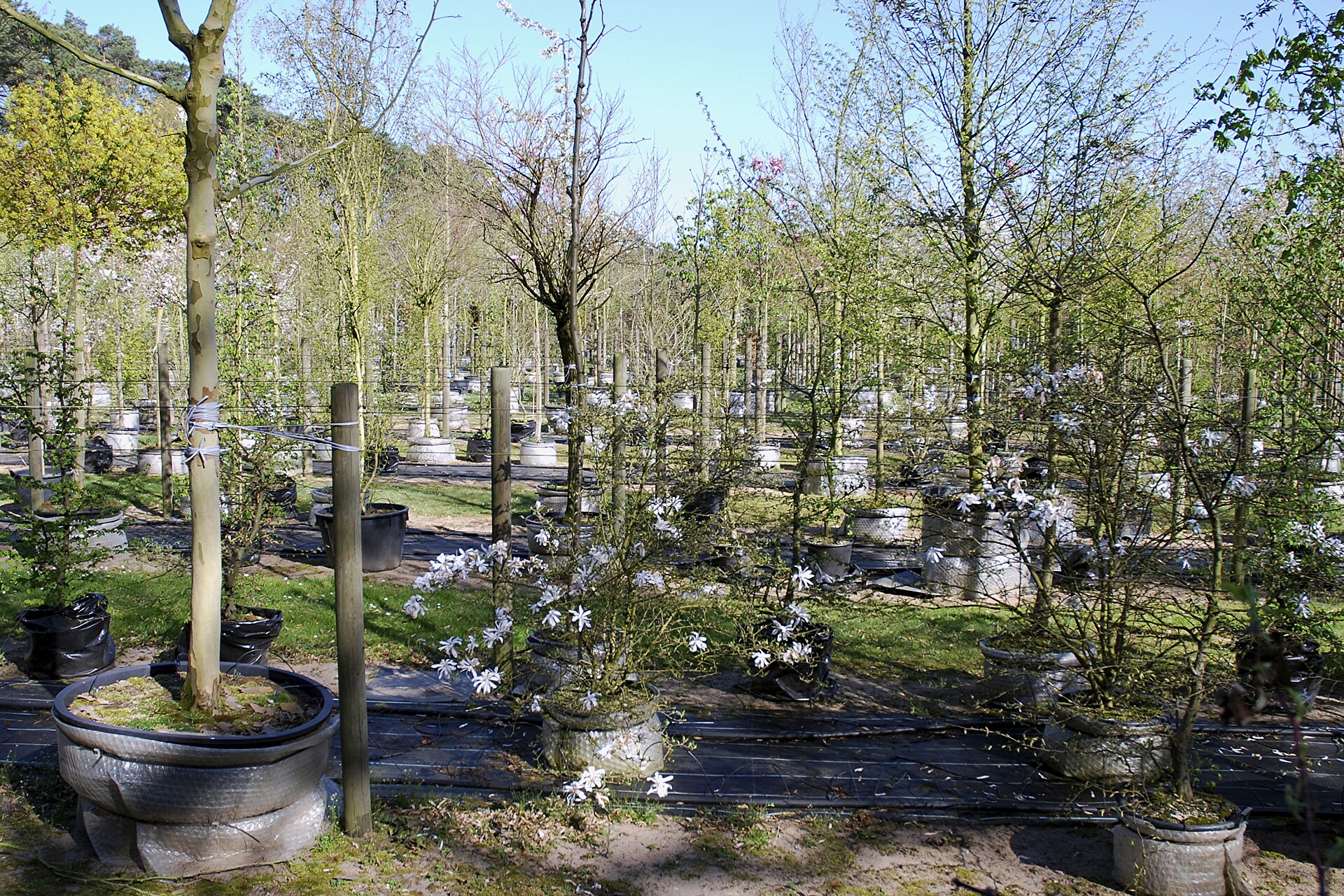
It is used in planters and balcony containers, raised beds and roof gardens, and in open-ground beds where established plants need slow delivery to depth. Each case has a different constraint, and the package is defined by covering the three with a small number of components.
02 – How to make a preliminary selection
Start with the substrate. A light, free-draining mix in a container accepts water quickly and loses it quickly; a dense bed accepts slowly and holds longer. The emitter flow and the cycle length follow from that, not from the plant’s appearance.
Then measure the container or bed. A container’s volume limits the root zone and therefore the buffer against a missed cycle; a raised bed’s depth and edge exposure decide where it dries first. Both are layout facts that change the emitter spacing.
Then choose the delivery: drippers for containers and beds, a slow-delivery line for open ground and established shrubs. Pressure-compensating dripline is specified at 120 mesh by Rain Bird and Netafim, which fixes the filter class for the whole package.
Finally, decide the control. A small number of containers can run on a timer; a mixed planting benefits from a controller with separate programmes, because the container and the bed should not share a schedule.
03 – Comparing the realistic options
The table frames the three cases against delivery and constraint.
| Case | Delivery | Constraint |
|---|---|---|
| Containers and planters | Drippers, adjustable | Small root volume, fast drainage |
| Raised beds and roof gardens | Dripline or micro-spray | Shallow profile, edge drying |
| Open ground and shrubs | Slow-delivery root-zone line | Infiltration rate, depth of wetting |
The three share one requirement: water must arrive slower than the substrate can absorb it, or it runs off and the planting is watered unevenly regardless of how much was applied.
04 – What goes wrong, and what still needs confirming
The common failures are runoff from a container, dry edges in a raised bed, surface wetting without depth in open ground, and a schedule that suits one case and harms another. All are delivery-rate issues, and all are decided by emitter choice and cycle length.
Items to confirm in writing: container or bed dimensions and substrate; emitter type and flow; the filtration class; the cycle length and frequency; the control family; and the commercial terms – MOQ, price, lead time and spare emitters.
05 – What we can supply and what to send
Delta AgriFlow supplies the three cases: automatic drip and misting kits for containers and balconies, dual-line timed kits for two groups of planters, root-zone kits for open ground and shrubs, with dripline, filters and timers to complete each set.
Send six items: the number and size of containers or beds; the substrate; the planting type; water source and pressure; whether the cases share a schedule; and the quantity for a first order.
The most useful field test for a container installation is to run one cycle and dig into the substrate an hour later. If only the surface is wet, the emitter is delivering faster than the mix absorbs, and the fix is a lower flow or a longer, slower cycle rather than more water.
For raised beds, the equivalent test is the edge. Fill the bed, then check the corners and the north edge; if they dry first, the layout needs an emitter nearer the edge rather than a longer cycle.
For open ground, the test is depth. Insert a probe or dig a small hole after a cycle: water should reach the root zone, not sit in the top few centimetres. That single observation decides whether a root-zone line is the right instrument.
A second practical point is drainage. Containers with poor drainage saturate, and saturated substrate looks like under-watering from above. Checking the drainage hole is part of commissioning, not maintenance.
Where the same site has containers and beds, they should not share a valve. The two have different cycle requirements, and a shared valve forces a compromise that suits neither.
Cold and hot exposure change the schedule. A container in full sun dries in hours; one in shade holds water for a day. Recording both and setting separate programmes is what keeps the planting even.
Finally, keep the emitter model and cycle settings recorded on the installation. These small systems are extended more often than they are replaced, and the record is what keeps the extension consistent.
What to record at handover
A handover that consists of a working system and a verbal explanation is not a handover. Three things have to be written down: what was installed and where, what the settings are, and what the routine is. Record the emitter flow, the cycle length, the substrate mix and the number of containers per line.
The commissioning check matters as much as the record. Run one cycle and check for runoff at the container base and for depth in the bed; the observation decides whether the delivery rate fits the substrate. A reading taken once at commissioning is worth more than a datasheet, because it describes the installation rather than the product.
Finally, hand over the commercial part as clearly as the technical part. Hand over the schedule and the emitter model, because these small systems are extended far more often than they are replaced. Without it, the next order restarts from zero, and the advantage of a standard package disappears.
The same logic applies to a retrofit: it is cheaper to add a second line with a lower flow than to replace the first with a higher one. Slower delivery is a design choice, not a compromise.
Where a site has both containers and open ground, two kits and two programmes usually cost less than one clever compromise, because the compromise is discovered by the plants rather than by the installer.
06 – Questions, sources and next steps
Can a container use dripline? Yes, with the emitter chosen for the small volume. The limit is the substrate’s absorption rate, not the line type.
Why does water run off a raised bed? Because it arrives faster than the profile accepts. Slower delivery or a longer cycle fixes it; more water does not.
Does a root-zone kit need a filter? Yes. The drip emitters in the kit are as narrow as any other, and the published 120 mesh requirement applies.
A useful commissioning step for containers is to weigh one before and after a cycle. The difference is the water actually retained, which is more informative than the time the valve was open.
Where containers are moved between sites, the irrigation connection should be standardised as well; a connector that matches every kit in the yard saves a fitting from being cut and remade.
Where the planting is already established, the trial matters more than the specification: one container and one bed, run for a week, will show whether the delivery rate suits the substrate better than any calculation.
Before you order
- Container or bed dimensions
- Substrate and drainage
- Emitter flow and spacing
- Cycle length and frequency
- Filtration class
- Separate schedule from other cases
Information boundary
This article describes how the decision is structured. It is not a performance specification and does not state capacity, flow, pressure or service-life values for a specific product. Those values are confirmed per project after a written quotation; manufacturer figures cited are the published values for those products, not project commitments.
Reviewed: 2026-10-26. Next review after supplier specifications are confirmed in writing.
Sources and further reading
- Rain Bird XFA 13 mm dripline datasheet – 120 mesh filtration requirement, 50-350 kPa compensating range
- Netafim Techflow bid performance specification – 120 mesh or finer filtration, disc grades 40-200 mesh
- ISO 9912-1:2004 – Filters for micro-irrigation: classification
- ISO 18471:2015 – Verification of filtration grade
- FAO – Irrigation manual, Chapter 6: drip irrigation
Planting in containers or beds? Send dimensions and substrate through our quotation request.