Why Every Commercial Irrigation System Needs the Right Filtration Stage
Filtration is a stage, not a product: coarse stage protects the pump and the fine element, fine stage protects the emitters. Where each belongs and how many you need.

Irrigation filtration is the stage that decides what reaches the emitter, and everything downstream is designed around that decision. It is not a sieve bolted onto a pump; it is the part of the system that converts an unpredictable water source into a known working condition for the pipework, the valves and the emitters. When it is specified properly nobody notices it. When it is not, it becomes the most touched component in the installation.
01 – Why each channel needs it, and where it is used
| Channel | Role in this decision | Why they need it |
|---|---|---|
| Distribution and wholesale | Sell a stage, not a spare part | A distributor who sells a filter as an accessory loses the follow-on sales of elements, spares and adjacent components; the stage conversation is what builds the account |
| Contractors and integrators | Put the stage in the quotation before the emitters fail | Emitter blockages are the most common warranty argument in drip irrigation, and the filter is the defence that is cheapest to include |
| Direct B2B users – farms, nurseries, greenhouses, estates, municipal green | Protect an installation they operate daily | The cost of a blockage is measured in labour and uneven growth, both of which appear weeks after the cause |
| Specifiers and influencers – irrigation designers, water engineers, consultants | Define the working condition | The filtration class is a design input for the emitter selection; leaving it out produces a system that works on paper and fails in the first season |
Filtration appears at the head of every micro-irrigation system, in front of sensitive valves, ahead of a pump on a dirty source and at the intake of a network fed from surface water. In each position it does the same job with a different target, which is why the same product range covers positions that look unrelated.
02 – How to make a preliminary selection
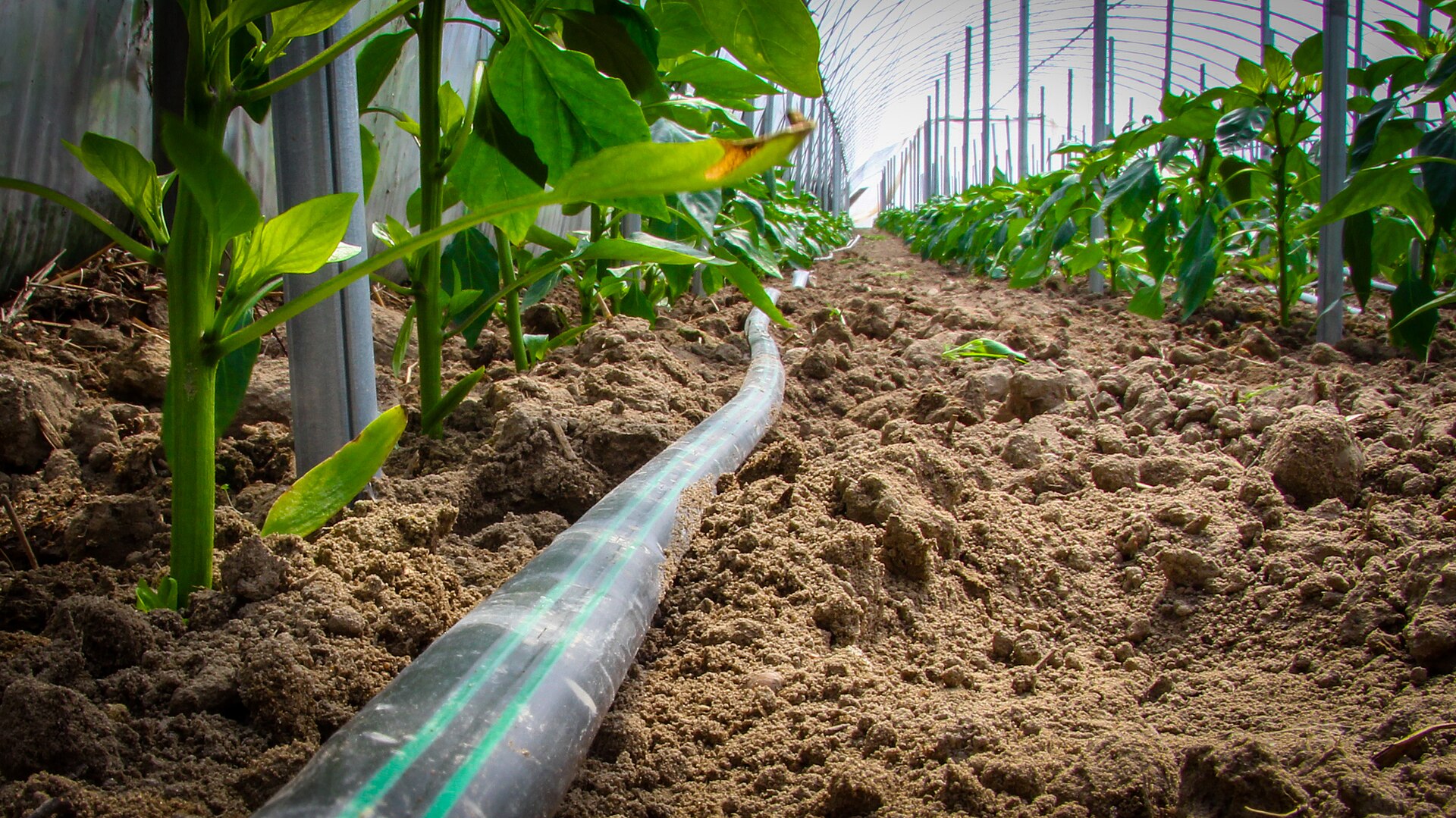
Start with the emitter. A pressure-compensating dripline has a narrow flow path, and the two manufacturers cited in this series publish a 120 mesh requirement for it. A sprinkler tolerates more; a valve tolerates more again. The emitter is the tightest passage in the system and therefore the target.
Then describe the water. Suspended particles, settleable sand, dissolved iron and biological growth behave differently and are removed at different stages. A single sample in a good season is not a description; the sample that matters is the one taken when the water is at its worst.
Then set the flow. Peak simultaneous flow decides the housing size, and the housing size decides the clean pressure loss. A unit sized on pipe diameter rather than flow is a common and expensive shortcut.
Then choose the cleaning model and the pressure margin. Manual cleaning needs a person and a gauge; automatic cleaning needs a flush route and a control. Either way, the filter loss at the loaded condition belongs in the pump calculation, because that is the condition the pump mostly operates in.
03 – Comparing the realistic options
The stages differ by mechanism and by what they are good at. The table places them by function rather than by product.
| Stage | Mechanism | Typical position |
|---|---|---|
| Screen | Surface capture | Visible debris, light load |
| Disc | Groove capture, larger area | Continuous fine load |
| Media | Depth filtration | Heavy or variable load |
| Centrifugal separator | Settleable solids | Sand ahead of the fine stage |
No single stage covers every source. The practical design is a sequence: remove what settles with a separator, remove the visible debris with a screen or a coarse disc, then protect the emitter with the grade its manufacturer specifies.
03b – What filtration is not
Filtration is not water treatment. It does not remove dissolved iron, it does not soften water, and it does not sterilise a line. Where those problems exist, the filter protects the network while the treatment decision is made separately, and expecting otherwise is how a filtration system acquires a reputation it does not deserve.
It is also not a substitute for maintenance. Every stage needs a cleaning routine, and the routine is part of the specification. A filter that is installed and forgotten performs the same function as no filter at all, with the added cost of the housing.
04 – What goes wrong, and what still needs confirming
The recurring failures are a stage sized on the wrong flow, a grade chosen without the emitter, a cleaning routine nobody owns, and a flush discharge that was never agreed. Each has the same signature: pressure loss that rises, emitters that block at the far end, and a maintenance reaction that starts too late.
Items to confirm in writing: the grade and its flow rating; the clean and loaded pressure loss; the element area and the cleaning interval; the cleaning method and the person responsible; the flush route and volume for an automatic unit; and the commercial terms – MOQ, spare elements, price and lead time.
05 – What we can supply and what to send
Delta AgriFlow supplies the stage across its mechanisms: Y-pattern disc filters, automatic disc filters, self-cleaning screen filters, media filtration, modular stations and centrifugal sand separators, with the flow meter and dripline that make the target concrete.
Send six items: the protected equipment and its required grade; the water source and its seasonal behaviour; peak flow and allowable pressure loss; the cleaning routine available on site; the discharge route for a backwash; and the quantity and spare parts needed for the first order.
One number worth recording at commissioning is the pressure loss across a clean element at the design flow. It is the baseline that tells the operator what the filter is supposed to cost in pressure, and it is what makes a later change visible. Without it, every future reading is compared with memory, and memory is not a specification.
A second is the time from cleaning to the next pressure rise. That interval is the honest maintenance requirement of the installation, and it is the number to quote when the next project is being specified. A supplier who can give both numbers for their own installation is describing a working system rather than a catalogue page.
On sources that change with the season, the stage that matters most is the one that can be adjusted. An element grade that is fixed for the worst month is expensive for the other eleven; a housing that accepts a different grade lets the routine follow the water rather than the calendar.
Finally, decide where the flush goes before the first wash. A filter with no discharge route is a filter that will be cleaned into a bucket or onto the ground, and neither is what the design assumed. That decision takes a minute at the planning stage and saves an argument at commissioning.
A related habit is to photograph the element before its first cleaning. The photograph and the cleaning date together become the reference for what normal looks like on that site, which is more useful than a description in a manual, because the material in the photograph is the material this installation actually receives.
Where two stages are installed, record which one loads first. That single observation tells the operator whether the coarse stage is doing its job or whether the fine stage is carrying the load the sequence was supposed to remove before it arrived.
For the buyer comparing two filtration offers, the useful question is what each stage is expected to remove. A stage described by its housing size rather than by its target has not answered the question, and the specification should ask for the target explicitly.
06 – Questions, sources and next steps
Is filtration the same as water treatment? No. Filtration removes particles. Iron, hardness and biological load are treatment questions, and the filter protects the network while those are decided separately.
Can one filter protect a whole system? Where the load is light and the flow modest, yes. On heavier sources the sequence carries the load, and one element asked to do everything fills too quickly.
How often should the element be checked? Record the first intervals and let them set the routine. Any figure chosen before commissioning is an assumption.
Information boundary
This article describes how the decision is structured. It is not a performance specification and does not state capacity, flow, pressure or service-life values for a specific product. Those values are confirmed per project after a written quotation; manufacturer figures cited are the published values for those products, not project commitments.
Reviewed: 2026-10-26. Next review after supplier specifications are confirmed in writing.
Sources and further reading
- Rain Bird XFA 13 mm dripline datasheet – 120 mesh filtration requirement, 50-350 kPa compensating range
- Netafim Techflow bid performance specification – 120 mesh or finer filtration, disc grades 40-200 mesh
- ISO 9912-1:2004 – Filters for micro-irrigation: classification
- ISO 18471:2015 – Verification of filtration grade
- FAO – Irrigation manual, Chapter 6: drip irrigation
Specifying a filtration stage? Send the emitter class and the water description through our quotation request.