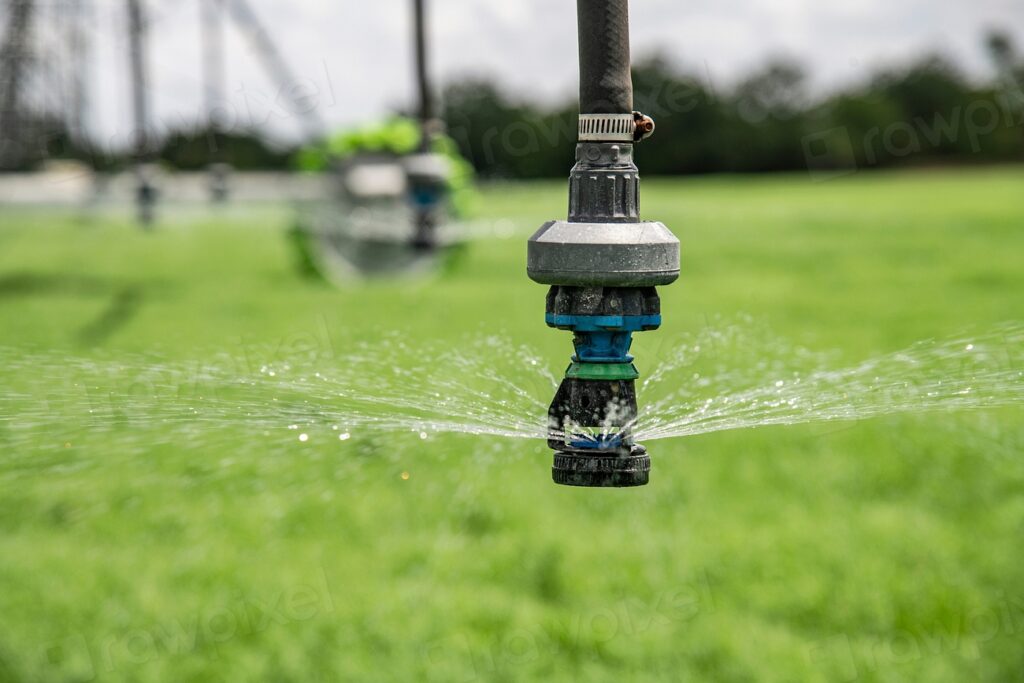
Why Sandy Well Water Requires the Right Pre-Filtration Strategy
Well water is judged by its worst week. Sand settles, silt does not, iron dissolves. How to build the filtration sequence from what the water actually carries.
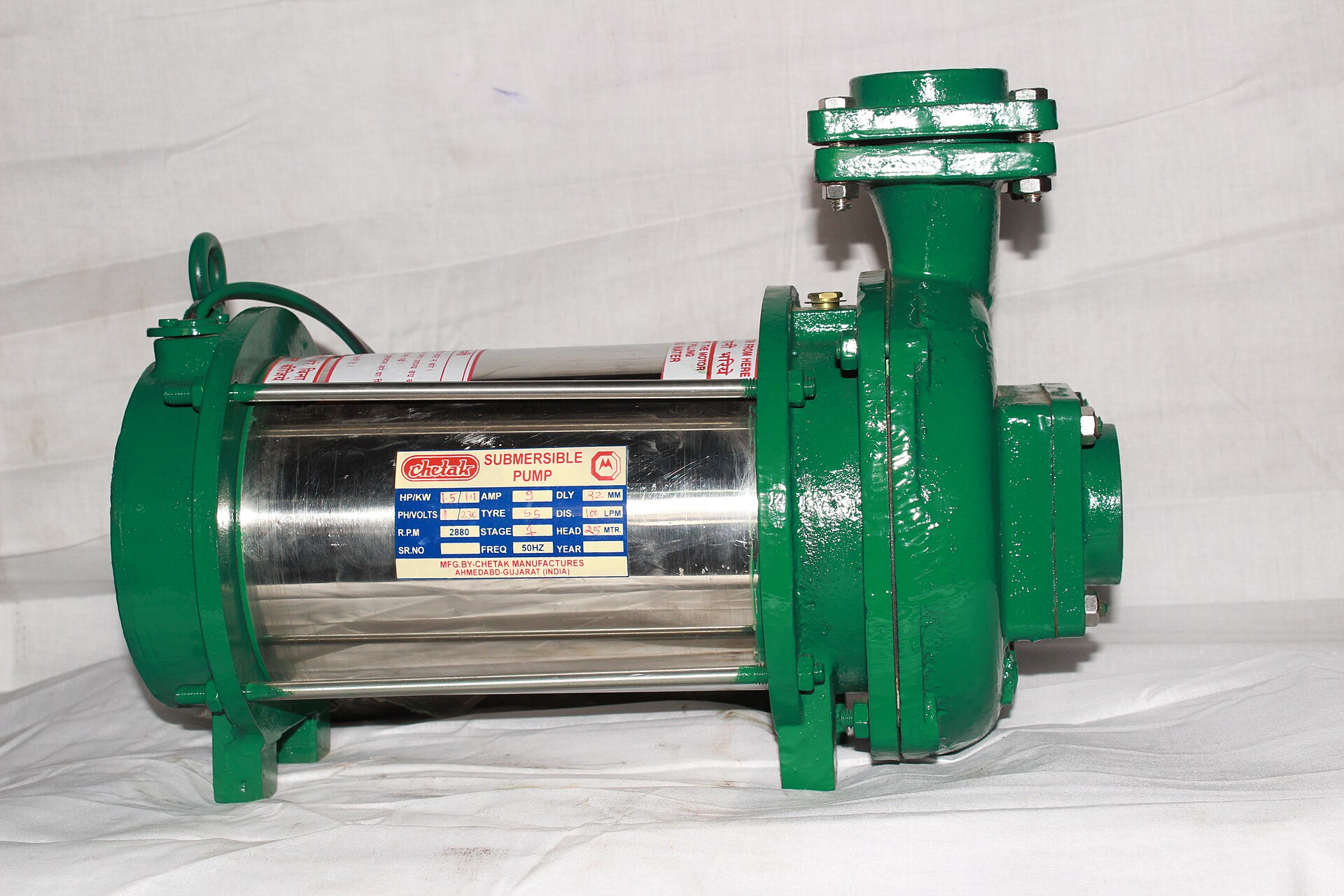
Well water is judged by its worst week, not by the glass in front of you, and the pump and the emitters pay for the difference. A well can deliver clear water for months, then sand after a drawdown change, then iron that only becomes visible once it oxidises inside the network. Filtration for a well is therefore a sequence of stages built around what the water actually carries, not a single element chosen for its fineness.
01 – Why each channel needs it, and where it is used
A buyer with a well usually starts from a symptom rather than from a specification. The emitters are blocking, the filter element needs cleaning every week, the pump has started making noise, or the water comes out brown after rain. The natural response is to buy a finer filter, because finer sounds safer. That response is the most expensive one available, because it treats a load problem as a fineness problem and adds cleaning work to a system that was already complaining.
| Channel | Role in this decision | Why they need it |
|---|---|---|
| Distribution and wholesale | Sell well-water packages – pump plus filtration – to installers and farms | A well customer arrives with a symptom, not a specification; a distributor who cannot separate sand from silt sells the wrong stage and inherits the complaint |
| Contractors and integrators | Commission wells, pumps and irrigation networks | Sand and silt cause callbacks that look like installation faults; a written contaminant sequence protects the contractor’s reputation and margin |
| Direct B2B users – farms, nurseries, greenhouses, estates | Pump their own water and live with the consequences | Water quality changes with the season and with drawdown; the cost of getting it wrong appears as blocked emitters, worn pumps and lost yield |
| Specifiers and influencers – irrigation designers, water consultants, maintenance firms | Specify the treatment train | A well supply usually needs a documented sequence for permits, warranties and handover; the sequence is what they are paid to get right |
The same water reaches all four groups, but the decision each one has to defend is different. A distributor defends a stock decision, a contractor defends a commissioning, an end user defends an operating cost, and a specifier defends a document. The contaminant sequence below is the one piece of work that serves all four.
What is actually happening in a well installation is a sequence problem. Sand arrives with the water and settles where velocity drops. Silt stays suspended and travels all the way to the fine stage. Iron and manganese dissolve in the water, pass through any mechanical element, and precipitate downstream where they form deposits on emitters and fittings. Each of those has to be handled in the place where it can be handled, and the order of the stages decides whether the system runs or fights itself.
The commercial stake is easy to underestimate. A week of extra cleaning is a small cost; a pump replaced early and a season of uneven irrigation are not. And because the symptoms appear at the far end of the network while the cause sits at the wellhead, the wrong component usually gets replaced first.
02 – What decides the answer
The first decision is what settles. Sand and gravel settle quickly and can be removed upstream of the fine stage with a centrifugal separator, a settling chamber or a coarse screen, at a pressure cost that is usually small. Silt does not settle in the same way; it stays in suspension, reaches the fine element and loads it continuously. Treating both with one fine filter is the most common reason a well system needs attention every week, and separating them is the change that most often fixes it.
The second decision is what dissolves. Iron and manganese pass through a mechanical filter because they are not particles yet. They become visible after oxidation, when they turn into a red-brown deposit on the element, the emitters and the fittings. Hardness behaves over longer periods, scaling the inside of pipes and reducing the flow path. None of those three is solved by a finer element, and the test that identifies them has to happen before the filter is sized.
The third decision is biological. Wells are not sterile, and standing water, open storage and warm lines all support growth. Biofilm develops on the element and inside the laterals, and it returns after cleaning if the conditions that support it are unchanged. Where biological load is present, filtration changes the symptom at best; the response includes flushing routines, storage protection and, in some cases, treatment ahead of the filter.
The fourth and fifth decisions are the hydraulic ones that every well installation has to answer: the peak flow the pump can actually deliver at the working pressure, and the pressure margin available for filtration. A filter selected on the pump’s nameplate flow will be oversized at the real duty or undersized once the pump wears. A filter selected without checking the margin will be efficient when clean and unaffordable when loaded, and the cleaning frequency becomes a hydraulic decision rather than a maintenance preference.
03 – Comparing the realistic options
Once the contaminant sequence is written down, the options narrow quickly. A coarse separator handles settleable sand. Media filtration enters where the load is high and continuous, or where the discharge requirement makes depth filtration the practical choice. A disc or screen element handles the fine stage and protects the emitters. Automatic backwash belongs at the stage that loads fastest, and its justification is labour and continuity rather than technology.
| Stage | What it removes | When it earns its place |
|---|---|---|
| Intake protection | Gravel, debris, large sand | Always, before anything else |
| Centrifugal separator | Settleable sand | When the well produces sand |
| Media filtration | Fine suspended solids | High or continuous load |
| Disc or screen element | Particles above the emitter limit | Fine stage, before the network |
| Automatic backwash | Not a contaminant – a cleaning method | When cleaning happens daily or the site is unattended |
Two published figures are useful when narrowing the fine stage. Rain Bird’s XFA 13 mm dripline and Netafim’s Techflow specification both state a 120 mesh requirement for pressure-compensating dripline, and Netafim lists disc filter grades from 40 to 200 mesh. That means the fine stage is fixed by the emitter chosen, and the coarse stage is fixed by what the well produces – two separate decisions that are often merged by mistake.
04 – What goes wrong, and how to prevent it
The first failure is sampling once, in the best season, and sizing on that sample. A well sampled after a wet period carries less material than the same well after a dry spell, and the design built on the first sample is built on the best case. Sample under the pumping conditions the system actually uses, record when and where the sample was taken, and write down which season the design assumes.
The second failure is asking the fine stage to do the coarse work. The element fills in days, the operator cleans more often than planned, and the conclusion drawn is that the element is poor quality. In reality the fine stage is doing two jobs, and the second one was never budgeted. Adding a coarse stage upstream usually removes several cleanings a month downstream, and it is the cheapest change in the whole train.
The third failure is ignoring the pump. Sand wears impellers and seals, and a pump set too close to the bottom draws sand by design. Intake position, submergence and protection belong in the same conversation as the filter, because a filter protects the network while the intake arrangement protects the pump. A well system that keeps replacing elements and never looks at the intake is treating the symptom twice.
05 – What we can supply and what to send
Delta AgriFlow supplies the stages of a well-water train rather than a single box: compact stainless steel deep-well pumps and high-flow deep-well pumps, media filtration systems, automatic disc filters and self-cleaning screen filters for the fine stage, compact Y-pattern disc filters for smaller duties, and modular filtration stations where several stages are combined. Because the pump and the filtration come from the same conversation, the duty can be written once instead of twice.
To make a well-water review useful, send six items: well depth and the static and dynamic water levels; sand content and how the water behaves after pumping; peak flow and working pressure; iron, manganese and hardness results if available; existing intake protection and storage; and the protected equipment at the end of the network. With those, the sequence can be laid out in one pass instead of being discovered by trial.
06 – Questions, sources and next steps
Will a finer filter solve sand in well water? No, and it usually makes the maintenance worse. Sand is better removed before the fine stage, where the pressure cost is lower and the element does not fill in a day. A finer element catches the sand and needs cleaning constantly.
Can filtration remove iron? Dissolved iron passes through a mechanical element and becomes visible only after oxidation. When iron is the problem, the analysis comes first and the treatment decision follows; a finer element cannot substitute for that.
How often should a well be re-tested? At least after a seasonal change and after any event that visibly alters the water – heavy rain, a change in pump setting, or a new drawdown level. The worst season is the one worth documenting for the design.
Information boundary
This article describes how a well-water filtration sequence is decided. It is not a water analysis and does not state results for a specific source. Capacity, fineness, materials and lead times are confirmed per project after a written quotation, and any manufacturer figure quoted here is the published value for that product rather than a project commitment.
Reviewed: 2026-10-26. Next review after supplier specifications are confirmed in writing.
Sources and further reading
- Netafim Techflow bid performance specification – 120 mesh or finer filtration, disc grades 40-200 mesh
- Rain Bird XFA 13 mm dripline datasheet – 120 mesh filtration requirement
- ISO 9912-1:2004 – Filters for micro-irrigation: classification
- ISO 18471:2015 – Verification of filtration grade
- FAO – Irrigation manual, Chapter 6: drip irrigation
Working from a well? Send well depth, sand content and peak flow through our quotation request and we will lay out the sequence.