Stock or Quote: How Distributors Should Handle Filtration Ranges
Holding stock ties up capital; quoting loses urgent enquiries. The hybrid model that works when the rules are written down.

A distributor stocking irrigation filtration faces a forced choice: hold stock and tie up capital, or quote per project and lose the fast enquiries. Most fail by doing neither deliberately. The workable answer is a small fast-moving core, quoted per project around it, with the rules written down so the sales team does not improvise.
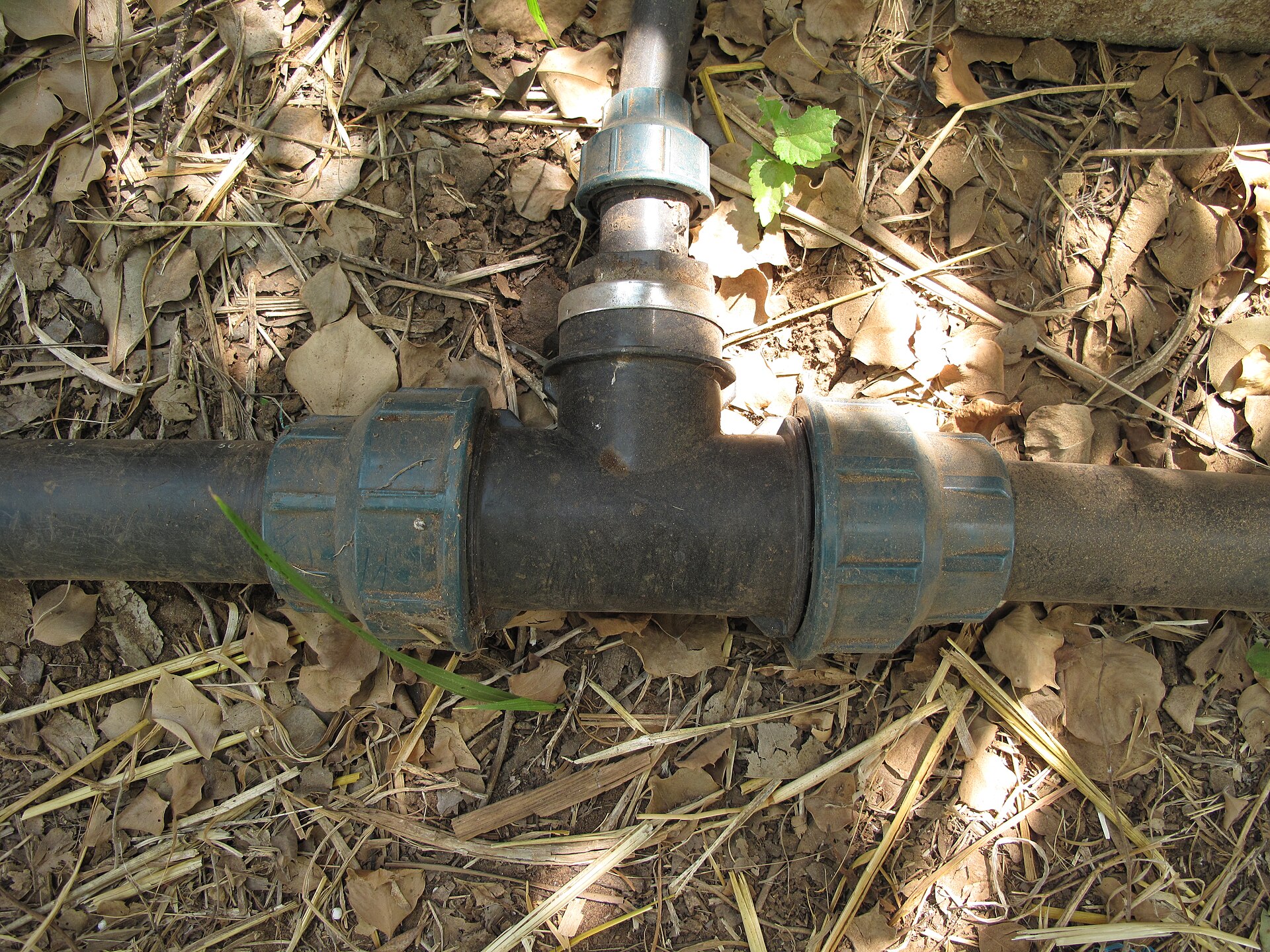
01 – Why each channel needs it, and where it is used
| Channel | Role in this decision | Why they need it |
|---|---|---|
| Distribution and wholesale | Decide what to stock, what to quote and what to drop-ship | Every held item is capital and shelf space; every quoted item is a delay. The mix decides the gross margin and the service level |
| Contractors and integrators | Buy from whoever answers fastest | A contractor with a crew on site does not wait three days for a filter; the distributor who can supply today wins the account |
| Direct B2B users – farms, estates, municipal green | Buy replacements and small extensions | Replacement purchases are urgent and small, which makes them the natural stock business |
| Specifiers and influencers – designers, procurement consultants | Decide which brands and classes are offered | A distributor’s stock list quietly becomes the specification list on small projects |
It applies to filtration ranges – compact disc and screen units, automatic stations, media vessels – and to the elements and spares that go with them. The elements are the most predictable repeat item, and the housings are the most project-specific.
02 – How to make a preliminary selection
Start with the demand pattern. Count last year’s orders by unit and by lead time. Items that sold in small numbers with urgent delivery belong in stock; items that sold once or twice with a planned delivery belong in the quote book.
Then check the supply side. Lead time, minimum order quantity and the supplier’s willingness to hold stock decide whether a fast-moving item can be replenished quickly enough to stay in stock. A stock item with a six-week replenishment is not a stock item.
Then define the boundary. Write down the rules: which classes are always stocked, which are quoted, what the delivery promise is for each, and who may override. Without the rules, each salesperson invents a different policy and the customer experiences a different company.
Finally, look at the service layer. Elements, seals and gauges are low-value items that make the difference between a one-off sale and a repeat account; stocking them is cheap and it protects the housing sale.
03 – Comparing the realistic options
The table frames the three supply models a distributor can choose.
| Model | Strength | Limit |
|---|---|---|
| Stock | Immediate delivery, wins urgent orders | Capital and obsolescence risk |
| Quote per project | No capital risk, exact specification | Slower, loses walk-in demand |
| Drop-ship | No stock, supplier delivers | Lead times and margin are outside your control |
| Hybrid | Core in stock, rest quoted | Requires written rules and discipline |
The hybrid is what most successful distributors actually run, but only when the rules are written. Without them, the hybrid becomes a series of exceptions.
04 – What goes wrong, and what still needs confirming
Typical failures are stock chosen from a catalogue rather than from order history, elements forgotten while housings are stocked, and a quoted lead time that the supplier cannot meet. Each turns into a service failure at the moment the customer needed speed.
Items to confirm in writing: which items are stocked and at what level; replenishment lead times; the delivery promise for quoted items; the element and spare range carried; pricing rules for project quantities; and the commercial terms with each supplier – MOQ, price validity and returns.
05 – What we can supply and what to send
Delta AgriFlow supplies filtration as a range a distributor can model: compact Y-pattern disc filters, automatic disc filters, self-cleaning screen filters, media filters and modular stations, with the elements and spares that repeat.
Send six items: last year’s volumes by item and lead time; the classes you intend to stock; the replenishment interval you need; the project types you quote; the element and spare range; and the delivery promise you intend to make.
A useful discipline for the stock list is to count by delivery urgency rather than by sales value. The item that is ordered in a panic is the item that must be in stock, even if its annual value is small; the item that is planned a month ahead can be quoted.
A second is to keep the elements in step with the housings. A housing sold today generates element sales for years, and a distributor who cannot supply the element loses the recurring margin to whoever can.
A third is to publish the promise. When the sales team can say ’stocked, ships today‘ or ‚quoted, five working days‘, the customer plans around it, and fewer orders are lost to silence.
A fourth is to review the list quarterly against actual orders. Ranges drift: an item stocked for a project that ended two years ago keeps occupying capital that a current item needs.
Finally, treat the supplier relationship as part of the stock decision. A supplier who can deliver in two weeks makes a wider stock range unnecessary; one who needs six weeks makes stock the only option.
What to record at handover
A handover that consists of a working system and a verbal explanation is not a handover. Three things have to be written down: what was installed and where, what the settings are, and what the routine is. Record which classes are stocked, at what level, and which are quoted; write the delivery promise next to each line.
The commissioning check matters as much as the record. Compare the promise against the last quarter’s actual delivery times; a promise that is not measured drifts. A reading taken once at commissioning is worth more than a datasheet, because it describes the installation rather than the product.
Finally, hand over the commercial part as clearly as the technical part. Hand the stock list and the replenishment lead times to the sales team together, because the promise is theirs to make. Without it, the next order restarts from zero, and the advantage of a standard package disappears.
What to settle before committing stock
- Order history by item and urgency
- Replenishment lead time per item
- Classes to stock and to quote
- Delivery promise per class
- Element and spare range
- Quarterly review date
A distributor’s stock list is also a marketing statement. The classes that are visible on the shelf tell a contractor what the company is serious about, and that message travels faster than any catalogue.
Where a range is new, the trial is the stock decision: order one of each class, sell them into known projects, and let the actual delivery performance decide what stays.
Finally, write down the exception process. Every policy has exceptions; the ones that are agreed in advance do not become arguments later.
06 – Questions, sources and next steps
Should a distributor stock filtration at all? The fast-moving compact units and the elements, yes, where order history shows urgent demand. The project stations are usually quoted.
How much stock is enough? Enough to cover the replenishment lead time at the observed demand, plus one spare of the items that wear.
What if a supplier cannot meet the lead time? Then the item cannot be a stock promise. It becomes a quoted item, and the delivery promise changes with it.
The stock decision also has a cash-flow dimension: an item that turns four times a year contributes more than one that turns once, even at a lower margin. Order history shows the turns, and the turns decide the list.
Where an item is quoted rather than stocked, state the lead time in the offer. A customer who plans around five days is satisfied by five days; one who assumed two days is not, even with a perfect product.
A stock list is a promise about time. Everything on it should be deliverable today; everything else should be quoted with a date. Mixing the two is what makes a distributor’s service unpredictable.
Before you order
- Order history by urgency
- Replenishment lead times
- Classes to stock
- Classes to quote
- Element and spare range
- Quarterly review date
Information boundary
This article describes how the decision is structured. It is not a performance specification and does not state capacity, flow, pressure or service-life values for a specific product. Those values are confirmed per project after a written quotation; manufacturer figures cited are the published values for those products, not project commitments.
Reviewed: 2026-10-26. Next review after supplier specifications are confirmed in writing.
Sources and further reading
- Rain Bird XFA 13 mm dripline datasheet – 120 mesh filtration requirement, 50-350 kPa compensating range
- Netafim Techflow bid performance specification – 120 mesh or finer filtration, disc grades 40-200 mesh
- ISO 9912-1:2004 – Filters for micro-irrigation: classification
- ISO 18471:2015 – Verification of filtration grade
- FAO – Irrigation manual, Chapter 6: drip irrigation
Modelling a filtration range? Send your volumes and lead-time needs through our quotation request.


